

The hardest part of buying a Hawaiian shirt for a boy is not finding a print he likes. It is finding a size that still fits next month. Boys grow in jumps, not in a steady line. One of the grandkids went to bed in a shirt that fit perfectly and woke up with the sleeves halfway up his forearms. I am not exaggerating. I have dressed enough children for birthday luaus and holiday photos to know that the tag on the shirt is the least reliable thing about it. The age range printed on the tag is a guess, and the guess is usually wrong. The tape measure is never wrong.
When I needed a Hawaiian shirt for a grandson's birthday luau, I did what I always do: I measured him first, I read the size chart second, and I ignored the age on the tag. The siliteelon boys' Hawaiian shirt I ended up with fit him right out of the package, and it still fits him six months later. That did not happen by luck, and it did not take a lot of time either. The whole thing took about ten minutes, most of it spent getting him to stand still. There is a system to it, and it works the same way for every boy, whether you are shopping for your own son, a nephew, or a grandkid who lives far away and grows an inch between every visit.
The Shirt I Would Buy Again for Any Grandson
If you want a cotton, short-sleeve button-down that comes in toddler through youth sizes and fits true to the chart, start with the siliteelon boys' Hawaiian shirt. Measure your boy first, then check today's price.
Amazon Check Today's Price on Amazon →Step 1: Measure the Boy Before You Shop
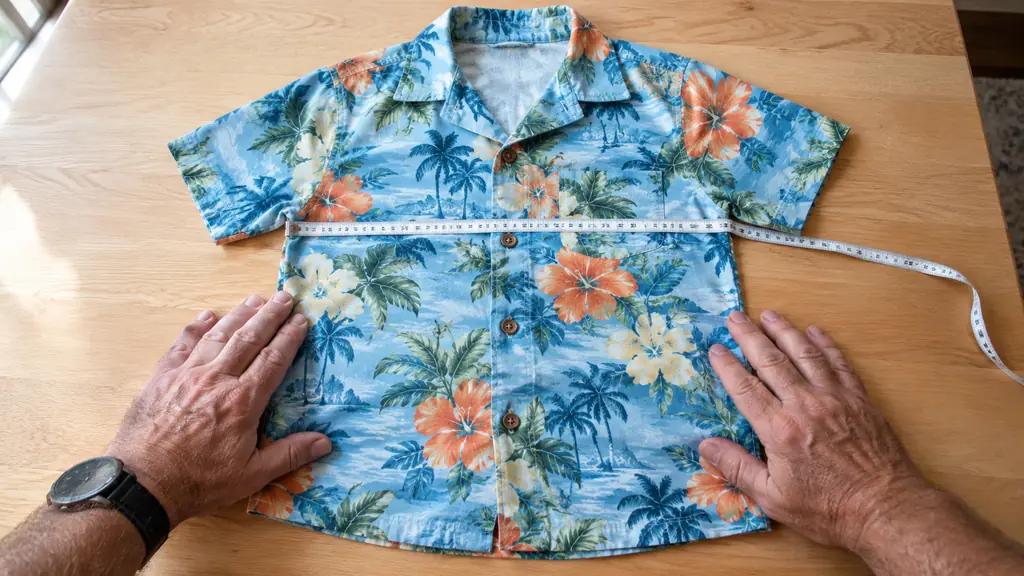
Measure first. Do not start with the age on the tag, and do not start with the size he wore last year. Start with a cloth tape measure and a boy who will stand still for about ninety seconds, which is easier if you let him hold something interesting. You need three numbers: his chest, his height, and the length of a shirt he already owns and wears comfortably. If you do not have a cloth tape measure, a piece of string and a regular ruler work fine. Wrap the string, mark it, and measure it.
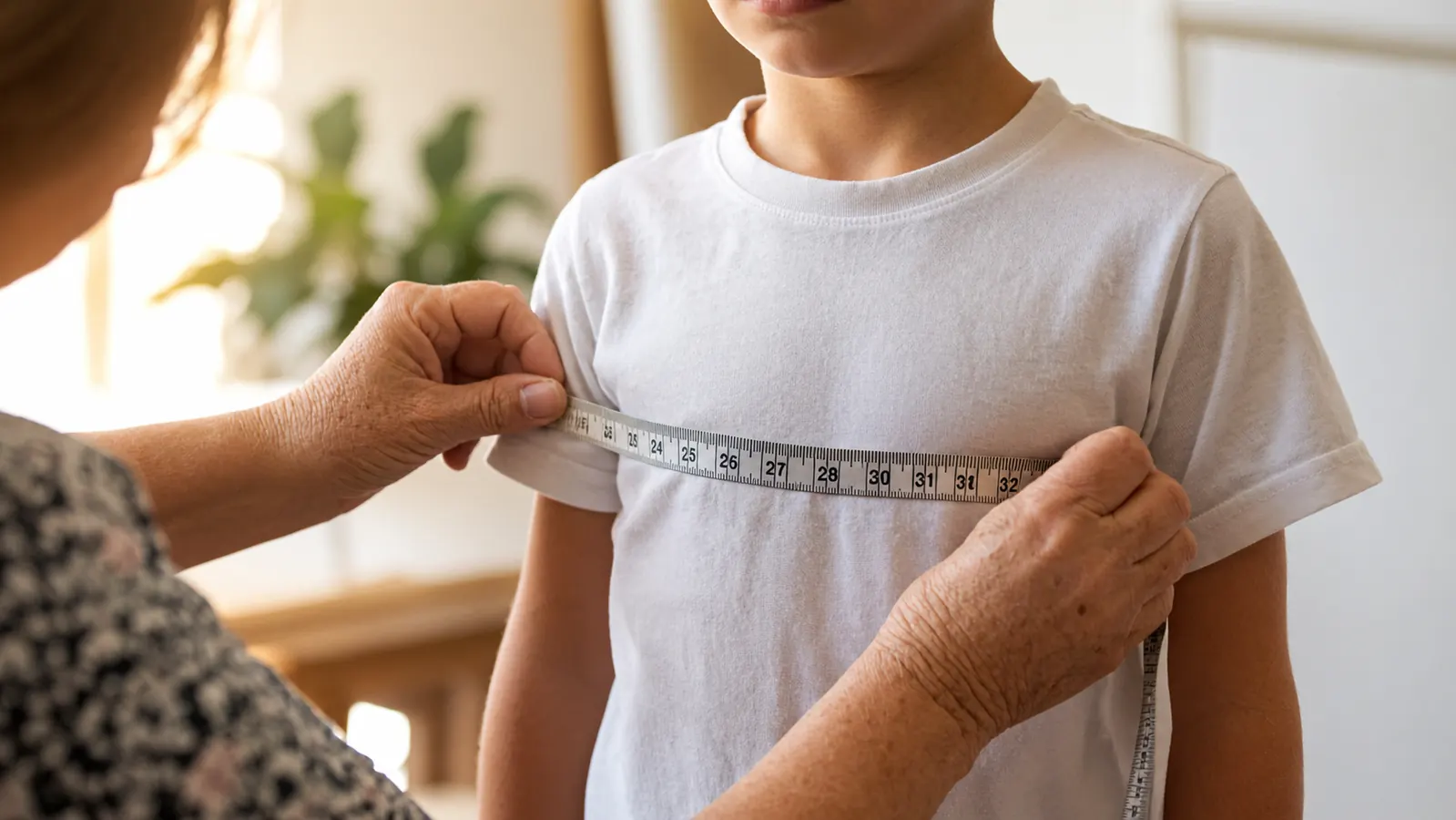
For the chest, wrap the tape around the widest part of his ribcage, just under the arms. Keep it snug but not tight, and let him breathe normally. You want to be able to slide two fingers between the tape and his chest. That is your fit number. For the height, have him stand against a wall with his shoes off, mark the top of his head with a pencil, and measure from the floor to the mark. For the shirt length, lay a favorite shirt flat on the floor and measure from the shoulder seam to the bottom hem. That tells you the length he is used to.
Write the numbers down. You will compare them against the size chart in the next step, and you will forget them by then if you do not write them down. I say this from experience. It takes two minutes and it saves you a return.
Step 2: Read the Size Chart for That Exact Shirt
Here is the part that trips up a lot of people: a youth large in one brand is not the same as a youth large in another. I have learned this the hard way more than once. The siliteelon boys' Hawaiian shirt lists its sizes across toddler through youth, and the chart gives a chest measurement and a height range for each size. Use those numbers, not the age range printed next to them. And take a minute to read what other parents say about the sizing. The siliteelon shirt has a lot of reviews, and a good number of them mention how the sizes run. If the reviews say the shirt runs true to the chart, trust the chart. If they say it runs small, size up.
Take the three numbers you wrote down and compare them to the chart. If the age range says he should wear a size 6 but his chest measurement lines up with size 8, buy the size that matches his chest. The shoulders and chest are where a button-down has to fit. A shirt that pulls across the chest will never look right, no matter how much room there is in the hem. And if you are buying online, look for the size chart on the product page before you add it to the cart. The chart is there for a reason, and it is the same chart the reviewers used.
Also check the sleeve length on the chart if it lists one. A short sleeve should end about halfway between the shoulder and the elbow. Sleeve length is the first thing to get too short when a boy grows, and it is the easiest way to tell a shirt has been outgrown. When a sleeve starts creeping up, the shirt is done, even if the chest still fits.
Step 3: Decide What Fit the Occasion Needs
A shirt for a birthday luau photo is not the same as a shirt for a day at the beach, and the right size depends a little on which one you are shopping for. For photos, you want a fit that looks tidy in a picture: the shoulder seams sitting at the right spot, the hem around the hip, no billowing in the back. For play, a little more room is fine, because he is going to move. When in doubt, I lean toward the roomier side for play and the truer side for pictures. A slightly loose shirt still photographs fine. A slightly tight one does not.
Here is the test I use for any button-down shirt on any child. Have him button it all the way and raise both arms straight over his head. If the hem pulls out of his waistband or the buttons pull across the chest, the shirt is too small for the way he is actually going to wear it. A Hawaiian shirt is supposed to feel easy. If it feels tight when he moves, it is the wrong size, no matter what the tape measure said.
For a holiday photo or a family picture, hold the shirt up against him before you commit. Look at where the shoulder seams land. If they sit right at the edge of his shoulder, the fit is right. If they creep up toward his neck, he has outgrown that size. And if the shirt is a gift and you cannot try it on him, buy the size that matches his chest and go up one if he is between sizes, which brings me to the next step.
Step 4: Size Up One When He Is Between Sizes
This is the rule I tell every parent and grandparent I know: if the boy falls between two sizes, take the bigger one. Always. The siliteelon shirt is cut with some room through the body, so going up a size does not make it look like a costume. It just gives him another season of wear, and that is worth a lot when boys grow as fast as they do. The room through the body is what makes Hawaiian shirts forgiving. They are not meant to be tucked in tight or worn close to the skin. They are meant to move, and a boy who is between sizes will not look lost in the bigger one.
Think about the timing. A shirt that fits perfectly in June can be snug by September. If you buy the larger size when he is between sizes, you get a shirt that fits now and still fits after a growth spurt. I bought our grandson's siliteelon shirt one size up from where he sat on the chart, and it fit him right out of the package. Six months later it still fits. That is the whole trick, and it is the reason this shirt worked out as well as it did.
One caution: bigger does not mean endless. Do not go two sizes up hoping he will grow into it. A shirt that is two sizes too big looks sloppy, the shoulders sag, and he will not want to wear it. One size up when he is between sizes, and one size up if you plan to use a dryer. That is the limit.
Step 5: Think About the Fabric and How It Will Wash
Before you click buy, think about what the shirt is made of and how you are going to wash it. The siliteelon boys' Hawaiian shirt is cotton, and cotton can shrink a little in a hot dryer. I wash everything at home on cold and line dry it on the lanai, and that is the kindest thing you can do for a cotton shirt. If you plan to use a dryer, buy the size up and keep the heat low. Cotton is the right fabric for a Hawaiian shirt because it breathes, which matters in warm weather. It also gets softer with every wash, so the shirt he wears to the luau will feel even better the third time he puts it on.
When the shirt arrives, wash it once before you judge the fit. A shirt that has been washed and line dried is the shirt he is actually going to wear. What fits out of the package can fit differently after the first wash, so do the fitting after the wash, not before. This saves you from making a return over a shirt that would have been fine all along.
And check the buttons while he has it on. The collar should sit flat, and the buttons should not pull across the chest when he sits down. If you can see the fabric gap between the buttons when he is sitting, the shirt is too small, no matter what the tag says. A well-fitted cotton shirt should move with him, not fight him.
What Else Helps
A few more things I have learned from years of buying shirts for the grandkids and dressing the whole family for luaus and holiday photos.
Buy for the season and the climate. Hilo is warm and rainy, so I want cotton that breathes and dries fast. If you live somewhere cooler, the shirt will probably be worn over a t-shirt, so buy a size that fits over one comfortably. A shirt that fits over a light t-shirt in winter will fit on its own in summer, and that gives you two seasons out of one purchase. Hilo weather means we get a lot of use out of short sleeves, but even in cooler places a cotton Hawaiian shirt over a plain t-shirt is a comfortable look for a boy.
Think about the photo, because that is usually why you are buying this shirt in the first place. Bold prints photograph beautifully. If the whole family is wearing Hawaiian shirts for a picture, keep the boy's shirt in the same family of prints so it looks intentional in the frame. And if the shirt is a gift, buy the size for the season he will actually wear it, not the season you are in right now.
Do not be afraid to roll the sleeves. A shirt that is slightly long in the sleeve can be rolled once for a neater look, and he will grow into it before you know it. And keep the receipt and check the return policy. Sizes vary between brands, and a boy can change sizes between the day you order and the day the package arrives.
One more note about cotton: it wrinkles when you line dry it. If that bothers you, take the shirt off the line while it is still slightly damp and smooth the front with your hands. It will dry looking a lot neater, and you will not have to iron it before the party.
One last thing: cotton shirts travel well. Roll them instead of folding them and they come out of the carry-on with fewer wrinkles. That is how I pack when the grandkids come to visit, and it means the shirt is ready to wear the day we arrive.
The siliteelon shirt I bought for the birthday luau fit him out of the package, and it still fits six months later because I sized up one when he was between sizes.
Measure, Size Up One, and You Are Done
That is the whole system: measure the boy, read the chart for the exact shirt, size up one when he is between sizes, and wash on cold. The siliteelon boys' Hawaiian shirt has been the right call for us, and I would buy it again.
Amazon Check Today's Price on Amazon →