
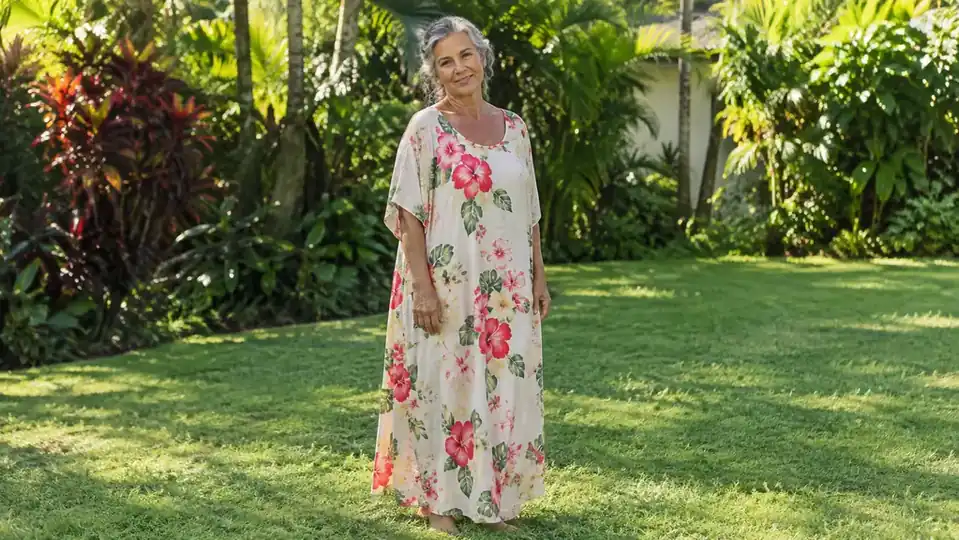
When summer settles over Hilo, the air gets heavy. The rain comes and goes, the sun comes back hotter, and every cotton dress I owned felt like a wet blanket by noon. I remember one particular Tuesday when I walked to the mailbox at nine in the morning and came back with sweat running down my back before I had even opened the box. I stood in the bedroom, looked at the pile of dresses on the chair, and realized none of them were going to make it through the summer. I am Noelani, I am 61, and I have lived here long enough to know that the only thing that works in this weather is something loose, something light, and something that dries fast. So when I ordered the MAKABO women's kaftan maxi dress, I was not looking for a fancy outfit. I was looking for a way to get through the day without feeling like I was wearing a towel.
Six months later, that dress is still hanging in my bedroom closet, and I still reach for it more than anything else I own. This is my honest long-term review of the MAKABO muumuu, after a full Hilo summer of gardening, family luau, Sunday church, and plenty of rain. I am not going to tell you it is perfect, because it is not. But I am going to tell you exactly how it has held up, what I love, and what I wish were different.
The Quick Verdict
The MAKABO muumuu is the coolest, easiest dress I own. It is not fancy and it will not hold its shape forever, but for Hilo heat, backyard gardening, and family gatherings, I have not found anything better.
Amazon Check Today's Price →The dress I reached for every single day this summer
After six months of daily wear in Hilo's heat and rain, the MAKABO kaftan-style muumuu is still the first thing I grab from the closet. Loose, breathable, and easy to wash.
Amazon Check Today's Price on Amazon →How I've Used It
I bought this muumuu in one print, for myself, and I have worn it almost every day since it arrived. That is not an exaggeration. On a typical day I am up by six, and the first thing I do is pull this dress over my head and walk out to the garden to water the tomatoes before the sun gets too strong. By seven the dress has dirt on the hem and a smudge of soil on the front, and I do not care. That is what it is for. I kneel in the damp earth, reach up to tie the pole beans, and squat down to pull weeds, and not once do I have to stop and adjust anything. There is no waistband digging in and no strap sliding off my shoulder. It just stays where it is. On wetter mornings, when the rain is just a drizzle, I wear it over my swimsuit to walk down to the beach with Kimo, and it is dry on me before we get home.
In the afternoon I wear it to the farmers market, where I am usually buying fruit for the week. Nobody there treats a muumuu like anything unusual, because half the women in Hilo are wearing one. When friends come over in the evening to play music on the lanai, I wear it, and no one has ever said a word about it, because it is exactly the kind of dress half the women there are wearing too. On Sundays I have worn it to church with a simple shell necklace, and the same dress that was covered in soil at seven in the morning looks perfectly fine at ten. That is the trick of a good muumuu. It can be a garden dress and a church dress in the same day without anyone thinking twice.
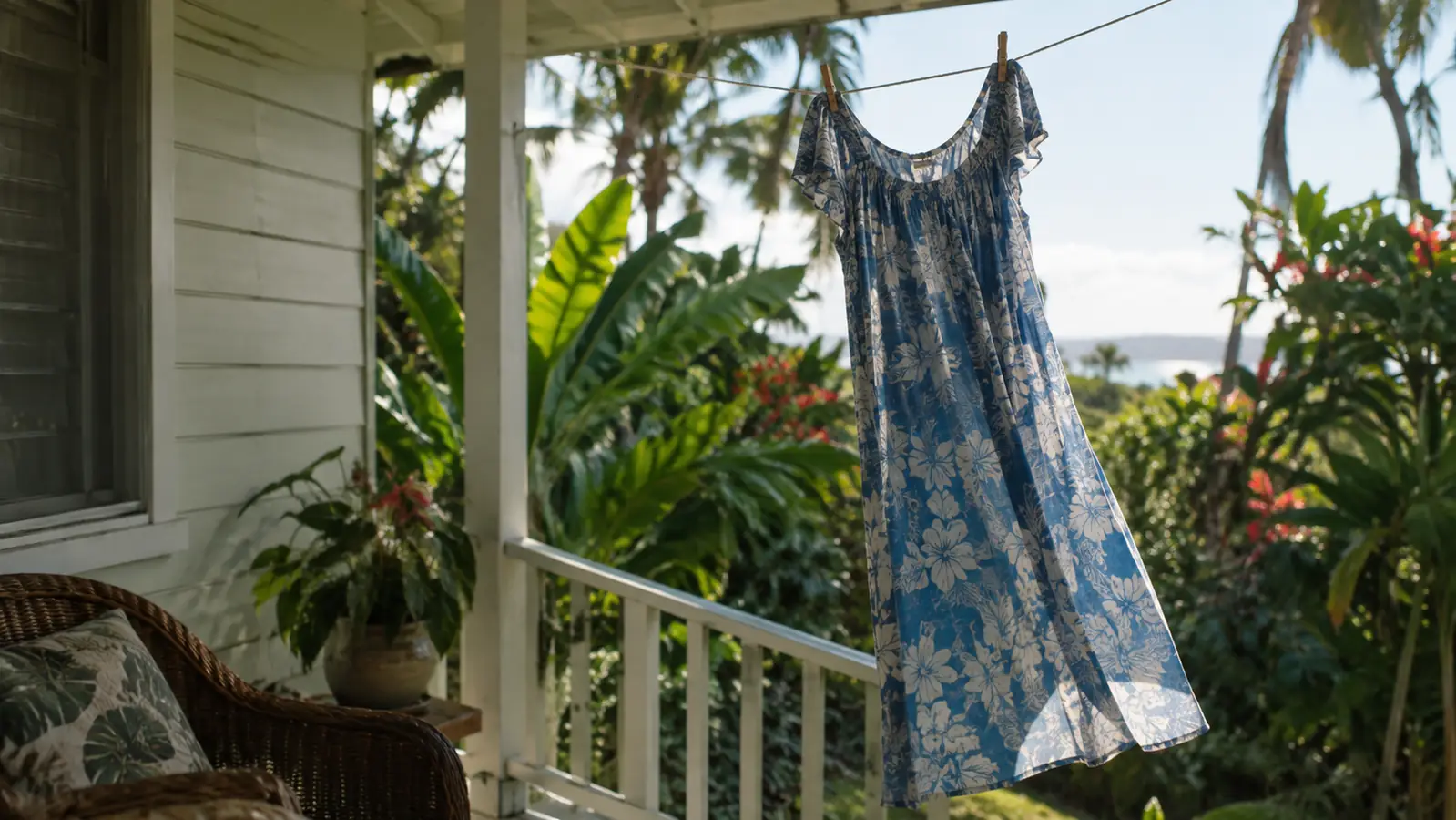
The best test came at my grandson's birthday luau in the backyard. We had maybe thirty people, the tables were crowded, and somebody knocked over a bowl of poke right onto the front of my dress. There was soy sauce, there was limu, there was a smear of sesame oil, and for a moment I thought the dress was done for. But I have washed this dress more times than I can count, so I did not panic. I took it off, ran cold water over the spot, and dropped it in the washing machine when everyone went home. The next morning the stain was gone and the dress was dry, hanging on the line in the lanai breeze. That is when I knew it was not just a summer dress. It was a dress I could live in. Since then it has been through spilled coffee, red dirt from the garden, and a grandkid with sticky shave ice hands, and every single mark has come out in the wash.

What Makes the MAKABO Muumuu Different
I have owned plenty of sundresses that looked cool on the hanger and turned into a sticky mess by ten in the morning. Before this MAKABO dress I tried a fitted cotton shift that rode up when I gardened, a rayon dress that clung to everything, and a linen sundress that wrinkled so badly I gave up ironing it after the second wear. The MAKABO muumuu is different because of the cut. It is not fitted anywhere. The shoulders are relaxed, the sleeves are loose, and the skirt swings free. There is nothing pulling across the chest or the hips, which means there is nothing trapping heat against your body. The dress pulls on over the head, so there are no buttons, no zipper, and no fiddly bits to deal with when you are already hot and tired.
The fabric is lightweight and soft, the kind of material that feels like it has already been washed a hundred times even when it is new. I cannot tell you the exact blend, because I do not know it and I am not going to guess. What I can tell you is how it feels: like a soft cotton nightgown, but long enough and covered enough to wear to the store. It is the kind of fabric that lets a breeze move through it, which is the whole point of a muumuu in the first place. On the muggy afternoons when the trade winds die down and the air just sits there, this dress does not make things worse.
The length is another thing I appreciate. It falls to the ankle on me, which means I do not have to think about whether it is too short to bend over in the garden. I can squat down to pull weeds, reach up to pick mangoes, and sit cross-legged on the floor with the grandkids, and the dress stays modest the whole time. When I sit on the floor to play cards with the grandkids, the skirt pools around me, and when I stand up, it falls right back into place like nothing happened. That matters to me. I want to be comfortable, but I also want to be decent when I stand up in front of the church choir.
How It Has Held Up Over Six Months
I am not easy on clothes. I garden in this dress, I cook in it, and I have washed it more times than I can count. After six months, the MAKABO muumuu still looks like a dress I would wear to a family photo, not a rag I keep for yard work. The color has not faded in a way I can see, even after all those cold washes and hours of line drying in the Hawaiian sun. The seams have held. The hem has not unraveled. The print still looks the way it did the day I took it out of the package.
I want to be specific about the washing, because that is where most of my dresses die. I wash everything on cold, gentle cycle, and I line dry it on the lanai, the way I have always done. This dress has been through that routine more times than I can count, including one week when it rained every single day and the dress needed an extra morning on the line. It came through fine, no smell, no stiffness, no mildew. When the sun finally came back, it was ready to wear by noon.
The one thing I will say honestly is that this is not a dress built for decades. The fabric is light, and light fabric eventually wears thin. I can feel that the material is not as substantial as it was on day one. It has not developed any holes, and it has not gone see-through, but I can tell that the weave has softened and loosened with all the washing. At today's price, I consider that fair. I would rather have a dress that is cool and comfortable for a few seasons than a heavy dress I never want to wear. If I get two good summers out of this one, I will be happy, and at the rate it is going, I think I will.
There was one moment about three months in where I thought the seam at the shoulder might be giving way. I checked it carefully, turning it inside out and running my fingers along the stitching. It was fine, just the way the dress had settled on the hanger. Since then I have stopped worrying about it. Nothing has ripped, no threads have pulled, and the dress has not stretched out of shape. That is more than I can say for some clothes I have owned for a much shorter time.
After six months of gardening, cooking, and one spilled poke at a birthday luau, the MAKABO muumuu still looks like a dress I would wear to family photos.
The Pros and Cons
What I Liked
- Loose, breathable cut that keeps you cool in real tropical heat
- Pull-on style with no buttons or zipper, so it is easy to get on and off
- Ankle length stays modest when you bend, reach, or sit on the floor
- Washes well on cold and line dries overnight, even in Hilo's humidity
- Soft, lightweight fabric that feels comfortable against the skin
- Generous fit, so you can order your usual size and still have room
Where It Falls Short
- Light fabric will eventually wear thin with heavy use
- One size choice, so if you are between sizes you have to decide for yourself
- No pockets, which I miss when I am in the garden
- Not a dress for dressing up; it is casual through and through
Who This Is For
This MAKABO muumuu is for anyone who lives somewhere warm and humid and has given up on regular dresses. It is for the woman who wants to look put together at the farmers market without feeling like she is wearing a corset. It is for the grandmother who needs to sit on the floor with the grandkids and still stand up looking decent. It is for the gardener who wants one dress she can pull on at six in the morning and wear until dinner. It is for the person who is tired of changing clothes three times a day because nothing feels right. If you live in a place where the summer runs from April to November, this is the dress that makes sense.
If you are the kind of person who hates feeling fabric stuck to your skin, who runs hot, or who simply wants a dress that does not demand anything from you, this is worth a look. It is not a fancy dress. It is a comfortable dress that happens to look nice, and in my book that is a better trade.
Who Should Skip It
If you need a dress for a formal event, this is not it. The MAKABO muumuu is casual loungewear, and it looks like it. It is not going to pass for a cocktail dress, and it is not trying to. If you want something with structure, a waist, or a fitted silhouette, you will be disappointed. This is a dress for the garden, the market, the beach, and the backyard, not for a wedding reception in a hotel ballroom. Save it for the easy days, and buy a different dress for the big formal occasions.
I would also say skip it if you are between sizes and you do not like a generous fit. The dress runs roomy, which I love, but if you prefer your clothes to fit closer to the body, you may find it too big. And if you are hard on your clothes and need something that will survive years of heavy use, the light fabric may not be substantial enough for you. This dress is a trade. You give up structure and durability, and you get cool and easy. That trade is worth it to me, but it is not worth it to everyone.
The Bottom Line
I have owned the MAKABO muumuu for six months, and I have worn it more than any other dress I own. It is cool, it is comfortable, it is easy to wash, and it has held up better than I expected for such a light dress. It is not perfect. I wish it had pockets, and I know the fabric will not last forever. But for a Hilo summer, for the garden, for the luau, and for Sunday church, it has been exactly what I needed. If you are looking for a muumuu or a kaftan-style maxi dress for warm weather, this is the one I would tell my own sister to buy.
Still the first dress I grab after six months
If you live somewhere warm, or you just want one dress that feels like a break from everything else, the MAKABO kaftan-style muumuu is worth trying. Check today's price and see the prints available now.
Amazon Check Today's Price on Amazon →