
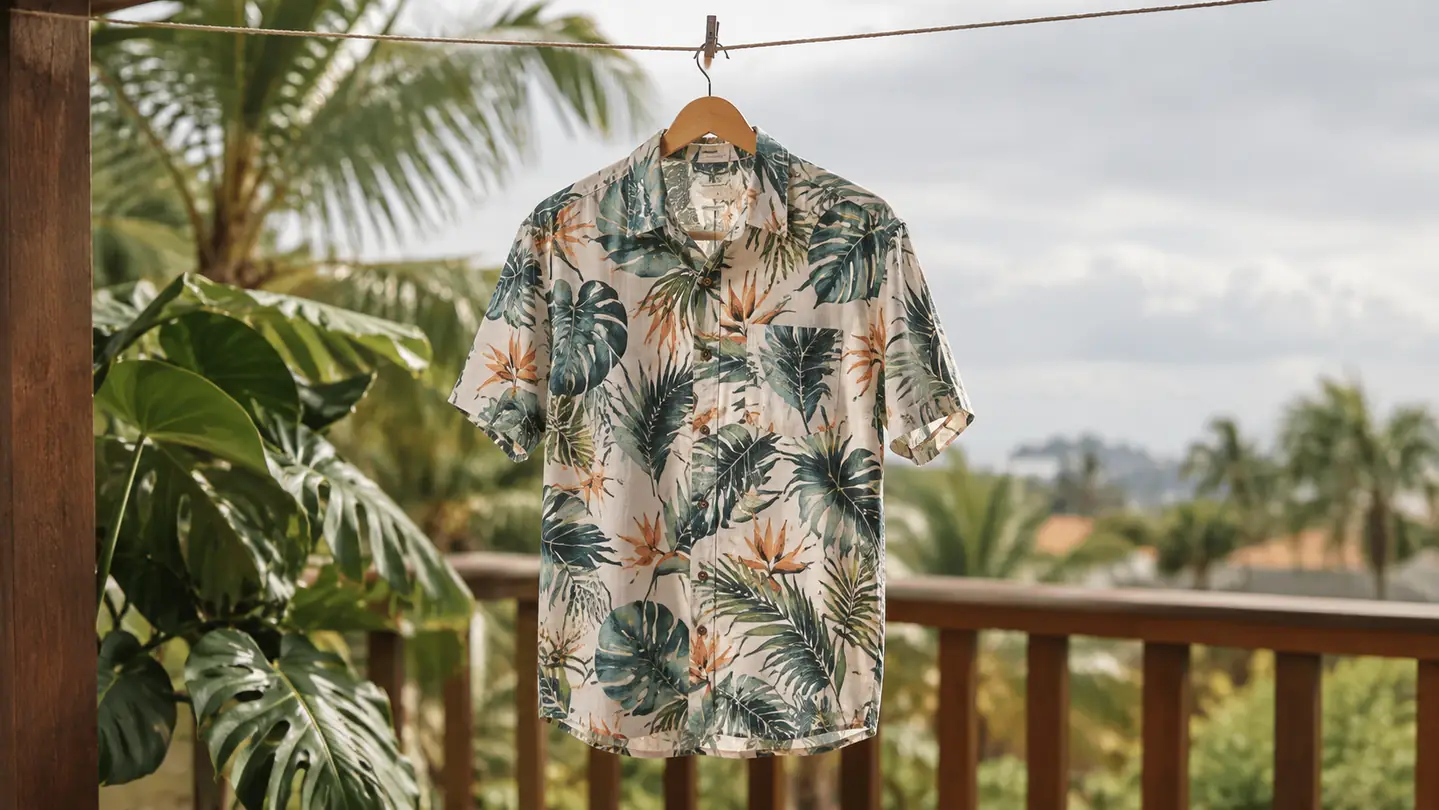
The first time Kimo wore his new HISDERN aloha shirt to church, one of the aunties asked how I keep the flowers so bright. The honest answer is that I do very little, and that little matters. Most printed shirts get ruined in the wash, not on the body. The colors fade, the white parts turn gray, and the print starts to crack or peel. With a good aloha shirt, almost all of that is preventable with the right routine. The shirt itself does not need to be babied. It just needs to be washed the way a light printed shirt likes to be washed.
I am Noelani, and I have been washing aloha shirts for my husband Kimo for more years than I like to count. We live in Hilo, where it is warm and rainy, so these shirts are not just for parties. He wears his to the market, to church, and to the birthday luau we hold in the backyard for the grandkids. About six months ago I added a HISDERN men's aloha shirt to his closet, one print, his usual size, and it has become the one he reaches for first. This is the washing and care routine that has kept the print looking new, and I think it will work for yours too.
Wash It Right and the Print Stays Bright
The HISDERN men's aloha shirt is lightweight and soft, with a camp-style collar and one chest pocket, and it holds up well when you treat it gently. If you are shopping for a first aloha shirt or replacing one that faded too fast, this is a good place to start. Check today's price on Amazon, then use these care steps from the very first wash.
Amazon Check Today's Price on Amazon →Step 1: Check the Pockets and Pretreat Any Spots
Before anything goes into the machine, I check every pocket. Kimo carries a pen, a wallet, sometimes a tissue, and one time a pair of sunglasses that did not survive the trip through the wash. The HISDERN shirt has one chest pocket, so the check takes two seconds. Turn the pocket out, brush away any lint, and lay it flat again.
Then I look for spots. In our house the usual culprits are poke juice, teriyaki sauce, and the red dirt that gets on everything in Hilo. I dab a little liquid laundry soap directly on the spot with my finger, rub it gently, and let it sit for ten minutes before the wash. I do not scrub hard. Scrubbing pushes the color out of the print and leaves a faded patch that is worse than the original spot.
If you are washing a brand new aloha shirt for the first time, do the same pretreat step even if it looks clean. New shirts can carry extra dye that has not fully set, and a little soap helps it wash away evenly instead of settling into the white areas of the print. This five minute step is the reason Kimo's shirts still look bright after months of wear.
Step 2: Turn It Inside Out and Button It Up
This is the step most people skip, and it is the one that protects the print the most. When you turn a shirt inside out, the design faces inward, so the agitator and the other clothes rub against the plain back of the fabric instead of the printed face. The colors stay sharper, and the fabric does not get that worn, fuzzy look that makes a shirt look old before its time.
I also button every button, including the collar button on the HISDERN shirt. Buttons keep the fabric from twisting and pulling during the wash, and they protect the buttonholes from stretching out of shape. Kimo tends to leave his shirt on the bedroom chair, so I have made it a habit to check it when I gather the laundry. It takes less than a minute, and it saves me from ever having to re-sew a button.
One more thing: wash it with other soft, light items. I put his aloha shirts in with cotton tees and pajama pants, never with jeans or towels. Rough denim and heavy terry cloth are the worst companions for a printed shirt because they grind against it for the whole cycle. Soft clothes let the shirt move freely in the water, and the print comes out looking the way it did when it went in.
Step 3: Wash Cold on Gentle
Cold water is the whole ballgame. Hot water opens up the fibers and pulls the dye right out of the print, and warm water is not much kinder. Cold water keeps the colors locked in where they belong. I use the regular washing machine at home, set to cold and the gentle or delicate cycle, with a mild liquid detergent. Nothing with bleach, and nothing with fabric softener.
Fabric softener is the quiet enemy of printed shirts. It coats the fibers with a waxy layer that can dull the print over time, and it leaves a residue that shows up on darker colors. If you want the shirt to feel soft, the fabric is already soft. The HISDERN shirt is lightweight and soft on its own, so I skip the softener completely and the shirts come out of the wash feeling just right.
A small load is better than a packed one. When the drum is too full, the clothes rub against each other more because there is no room to move. I give his aloha shirts room to float in the water, and I keep the wash time short. The gentle cycle on our machine runs about thirty minutes, which is plenty for a shirt that is not heavily soiled.
Step 4: Line Dry in the Shade
I never put an aloha shirt in the dryer. Not on high, not on low, not even for ten minutes. The heat is what makes the print crack and the fabric shrink. Hilo has plenty of rain, but we also have plenty of breeze, so I hang shirts on the lanai under the roof, out of direct sun.
Direct sun is almost as hard on a print as a dryer. The UV light fades the colors, especially the reds and oranges that make a Hawaiian print pop. Hanging in the shade takes a little longer, usually a few hours, but it is the difference between a shirt that still looks new after a year and one that looks like it spent a summer on a fence. On rainy days I hang it on the covered end of the lanai, and it dries just as well.
When I take the shirt off the line, I give it a snap to shake out the wrinkles. Kimo's HISDERN shirt dries soft, with a few creases at the seams. It wrinkles a little after line drying, and that is normal for a light shirt. It hangs out in about an hour, which is what we do before church when he wants to wear it that morning.
Step 5: Let the Wrinkles Hang Out
The wrinkles hang out within an hour on a hanger, and Kimo has never once asked me to iron it. If you do iron an aloha shirt, keep it on low and work inside out so the plate never touches the print. If the print has any raised or rubbery areas, put a thin cloth between the iron and the fabric, or skip the iron entirely. The goal is to smooth the fabric, not to press the design.
A steamy bathroom is even easier. Hang the shirt in the bathroom during a hot shower, and the wrinkles relax on their own. I use this for the collar and the front placket, the two places people actually look at. The back can stay a little soft, and nobody will ever know.
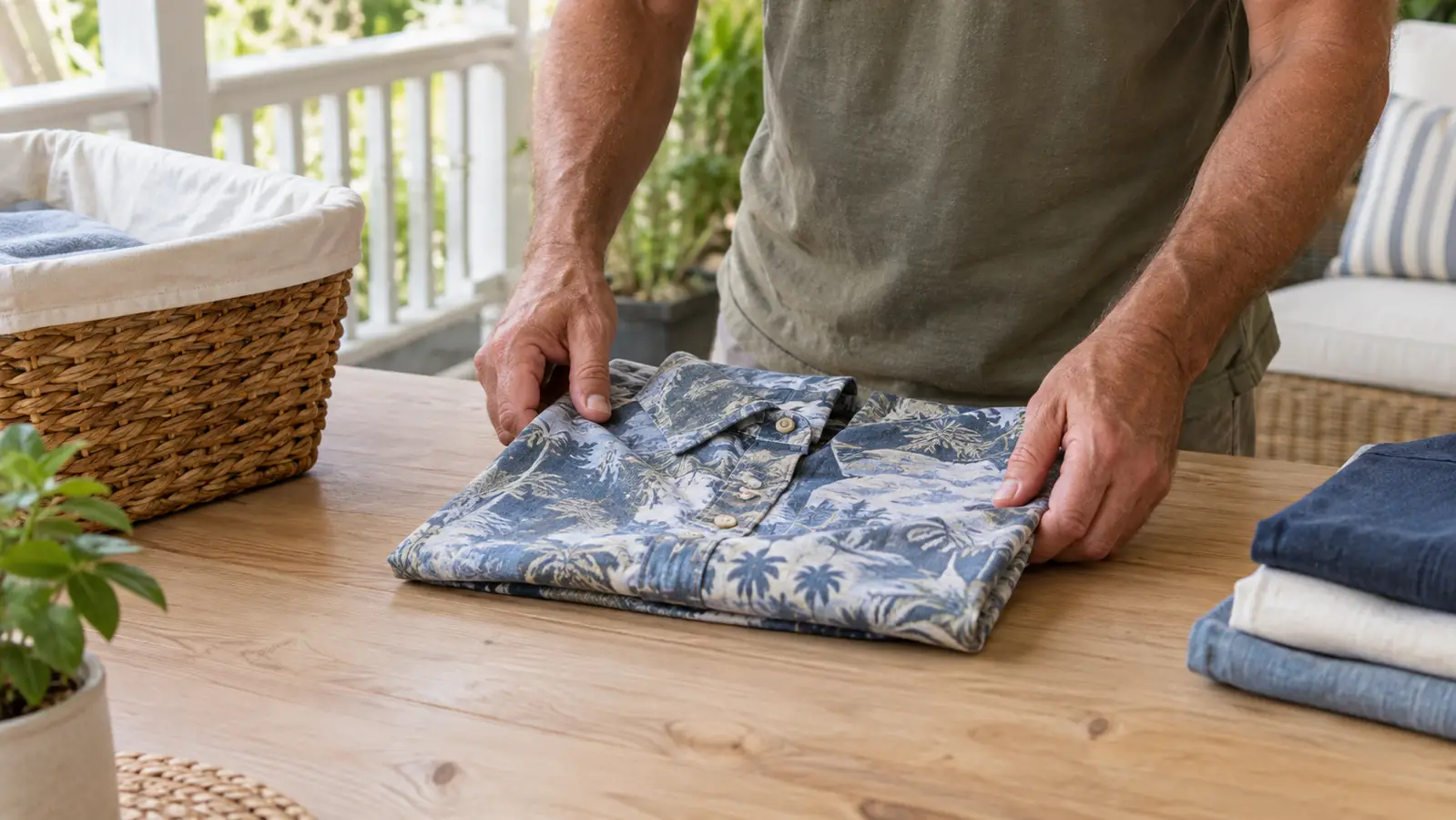
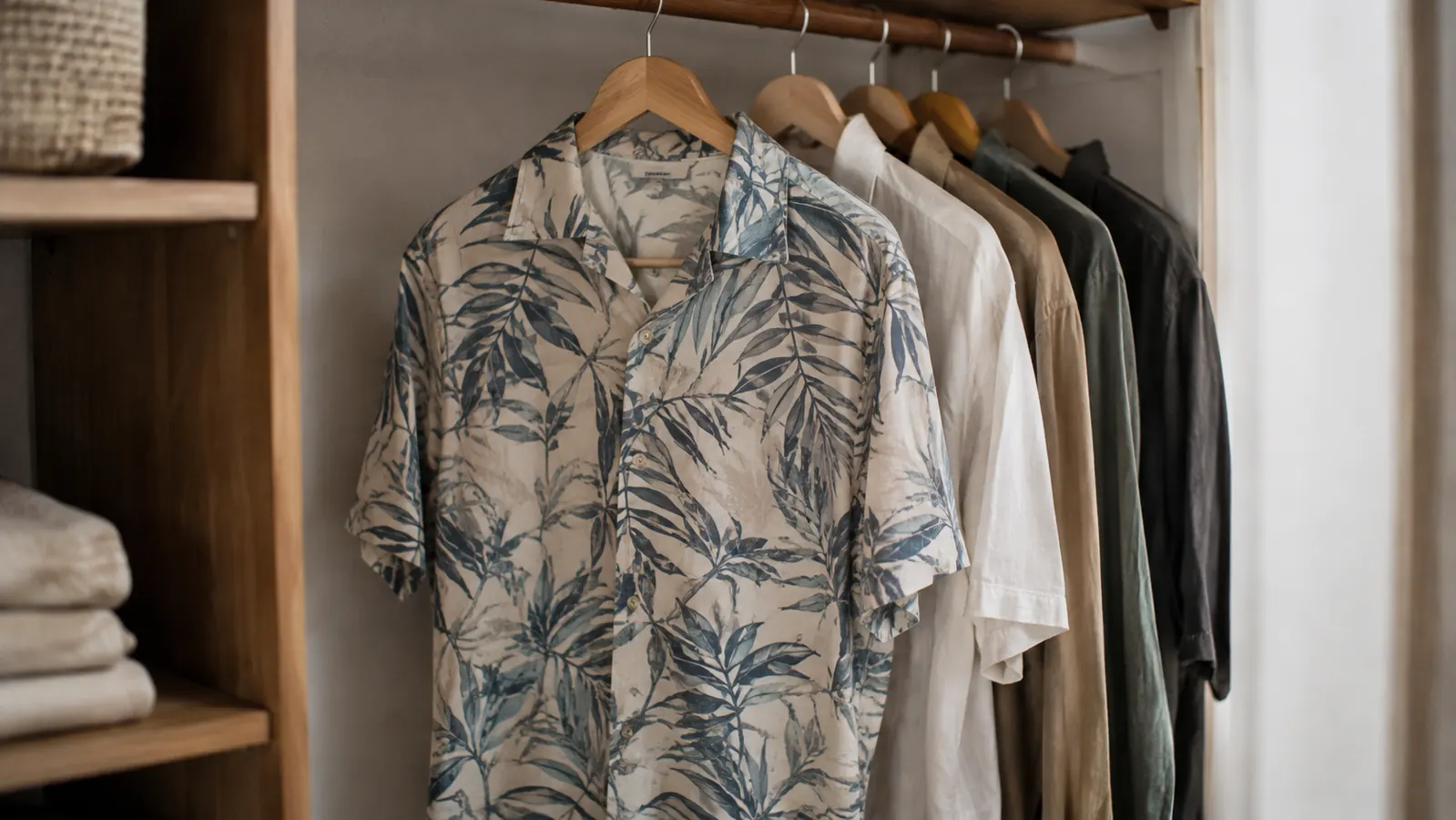
Then it goes on a plain hanger in the bedroom closet. I leave the top button undone so the collar keeps its shape, and I make sure the shoulders are sitting straight on the hanger. For trips, I roll it instead of folding it, which cuts down on creases and saves room in the carry-on. Kimo has worn this shirt for about six months now, and the print still looks like the day it arrived.
The First Wash Makes the Difference
If you just bought a new aloha shirt, do not wait until it is dirty to give it one wash. A quick first wash in cold water helps set the dye and washes away the extra color that can bleed onto your skin or onto a light chair. On the first wash only, I run it by itself so any extra dye has nowhere to go. It helps hold the colors, and the smell is gone by the time the shirt dries.
I know it sounds like a lot of steps, but the whole routine takes about five minutes of actual work. The machine does the washing, the breeze does the drying, and a hanger does the rest. What you are really doing is protecting the print from heat and friction, which are the two things that age a shirt faster than anything else. Get those two right, and the shirt will look good for years.
What Else Helps
Beyond the wash routine, a few small habits keep an aloha shirt going. I keep a spare button in a small dish in the closet when a new shirt comes with one, and I check the seams once a month for loose threads. I also rotate his shirts so the same one is not worn three days in a row. A shirt needs a day to relax between wears, and the print lasts longer when it is not rubbed against the same spots constantly.
For storage, plain wooden hangers beat wire hangers, because wire hangers leave dents in the shoulders. And when the grandkids are over and someone spills shave ice on the front, I dab it right away instead of letting it dry. The sooner a spot gets attention, the less likely it is to set. Poi, our little rescue dog, has never once chewed a shirt, but I still keep the closet door closed, just in case.
If You Wear It to the Beach or the Garden
Kimo wears his aloha shirt to the beach, to the farmers market, and into the garden when he is helping me pull weeds. Salt water and sunscreen are the two things that can dull a print faster than a bad wash. If the shirt touches salt water, I rinse it in plain cold water as soon as we get home, before it goes in the laundry basket. Sunscreen leaves oily spots, so I dab a little dish soap on those spots and let it sit before the regular wash.
I also tell Kimo to hang the shirt on the back of a chair for an hour after he takes it off, so the sweat dries instead of baking into the fabric in the laundry basket. It sounds small, but it keeps the underarms from holding onto odor. With this routine, his HISDERN shirt still smells fresh after a full day, and I do not have to use hot water or strong detergent to get it clean.
What I Would Not Do
I would not dry clean an aloha shirt unless the label says to. The chemicals are hard on printed fabric, and the heat from the pressing can crack the design. I also would not use bleach, even a little, and I would not leave a wet shirt crumpled on the floor overnight. A wet shirt left in a pile can develop a musty smell that is hard to get out, and the dye can transfer onto whatever it touches.
Heat is what kills a printed shirt. Cold water, a gentle cycle, and shade to dry will keep the print bright for years.
Start With a Shirt That Washes Well
If you are looking for a lightweight men's aloha shirt that washes well and keeps its color, the HISDERN men's shirt is the one we reach for. Check today's price on Amazon, and use these care steps from the very first wash so the print lasts.
Amazon Check Today's Price on Amazon →